|
Robert Burns
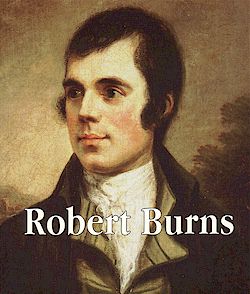
SCOTTISH POET ROBERT BURNS ( 1759-1796)
Posted by Picasa
Robert Burns (1759-1796),
“A Scottish Bard, proud of the name, and whose highest ambition is to sing in his country’s service, where
shall he so properly look for patronage as to the illustrious names of his native land: those who bear the honours and inherit
the virtues of their ancestors? The poetic genius of my country found me, as the prophetic bard Elijah did Elisha—at
the plough, and threw her inspiring mantle over me. She bade me sing the loves, the joys, the rural scenes and rural pleasures
of my native soil, in my native tongue; I tuned my wild, artless notes as she inspired.” --ROBERT BURNS, Edinburgh,
April 4, 1787.
From the grand website Robert Burns - Biography and Works Literature online
So here's a couple of Robert Burns' poems which are as relevant as ever. (They are adapted into English from the Scottish
dialect )
Robert Burns Scottish Poet, The Bard born January 25, 1759
Died july 25, 1796.
For more see the rather large website Burns Country: Official Robert Burns site
Anyway this poem " Such a parcel of rogues " by Robert Burns is about the Sottish Lords who betrayed their nation to the English
for property , power & gold. It is an apt & even today a relevant theme about those who are willing to sell out their own
countrymen for the right price.
Such a parcel of rogues
Farewell to(all)our Scottish fame,
Farewell our ancient glory;
Farewell even to the Scottish name,
So famed in martial story.
Now Sark flows over Solway sands,
And Tweed flows to the ocean,
To mark where England's province stands-
Such a parcel of rogues in a nation!
What force or guile could not subdue,
Through many warlike ages,
Is wrought now by a coward few,
For hireling traitor's wages.
The English ( still) we could disdain,
Secure in valour's station;
But English gold has been our bane-
Such a parcel of rogues in a nation!
O would, (before) I had seen the day
That Treason thus could sell us,
My old grey head had lain in clay,
with Bruce and loyal Wallace!
But without pith and power, till my last hour,
I'll (make) this declaration;
We're bought and sold for English gold-
Such a parcel of rogues in a nation!
The second poem is one of hope & a vision for a better world.
A Man's A Man For All That
1795
Is there for honest Poverty
That hangs his head, and all that;
The coward slave-we pass him by,
We dare be poor for all that!
For all that, and all that.
Our toils obscure and all that,
The rank is but the guinea's stamp, (pennies copper)
The Man's the gold for all that.
What though on humble fare we dine,
Wear hoddin grey ( like a sage), an' a that;
Give fools their silks, and knaves their wine;
A Man's a Man for all that:
For all that, and all that,
Their tinsel show, and all that;
The honest man, though ever so poor,
Is king of men for all that.
Ye see (yonder) birkie, called a lord,
Who struts, and stares, and all that;
Though hundreds worship at his word,
He's but a coof (fool ) for all that:
For all that, and all that,
His ribband, star, and all that:
The man of independent mind
He looks and laughs at all that.
A prince can make a belted knight,
A marquis, duke, and all that;
But an honest man is beyond his might,
Good faith, he musn't forget for all that!
For all that, and all that,
Their dignities and all that;
The pit of sense, and pride of worth,
Are higher rank than all that.
Then let us pray that come it may,
As come it will for all that,
That Sense and Worth, over all the earth,
Shall ( spread ), and all that.
For all that, and all that,
It's coming yet for all that,
That Man to Man, the world over ,
Shall brothers be for all that.
Robert Burns Country: The Burns Encyclopedia
'The Tree of Liberty'
(Here printed for the first time, from a manuscript in the possession of Mr James Duncan, Mosesfield [sic] near Glasgow.)
"Heard ye o' the tree o' France,
I watna what's the name o't;
Around it a' the patriots dance,
Weel Europ kens the fame o't.
It stands where ance the Bastille stood,
A prison built by kings, man,
When superstition's hellish brood
Kept France in leading strings, man.
"Upo' this tree there grows sic fruit,
Its virtues a' can tell, man,
It raises man aboon the brute,
It maks him ken himsel, man.
Gif ance the peasant taste a bit,
He's greater than a Lord, man,
And wi' the beggar shares a mite
O' a' he can afford, man.
"This fruit is worth a' Aric's wealth,
To comfort us 'twas sent, man:
To gie the sweetest blush o' health,
And mak us a' content, man.
It clears the een, it cheers the heart,
Maks high and low gude friends, man;
And he wha acts the traitor's part,
It to perdition sends, man.
"My blessings aye attend the chiel,
Wha pities Gallia's slaves, man,
And staw'd a branch, spite o' the deil,
Frae yont the western waves, man.
Fair virtue water's it wi' care,
And now she sees wi' pride, man,
How weel it buds and blossoms there,
Its branches spreading wide, man.
"But vicious folk aye hate to see
The works o' virtue thrive, man;
The courtly vermin's banned the tree,
And grat to see it thrive, man;
King Loui' thought to cut it down,
When it was unco sma',. Man,
For this the watchman cracked his crown,
Cut off his head and a' man.
"A wicked crew syne, on a time,
Did tak a solemn aith, man,
It ne'er should flourish to its prime,
I wat they pledged their faith, man,
Awa they gaed wi' mock parade,
Like beagles hunting game, man,
But soon grew weary o' the trade,
And wished they'd been at hame, man.
"Fair freedom, standing by the tree,
Her sons did loudly ca', man,
She sang a song o' liberty
Which pleased tehm ane and a', man.
By her inspired the new born race
Soon grew the avenging steel, man;
The hirelings ran — her foes gied chase
And banged the despot weel, man.
"Let Britain boast her hardy oak,
Her poplar and her pine, man,
Auld Britain ance could crack her joke,
And o'er her neighbours shine, man,
But seek the forest round and round,
And soon 'twill be agreed, man,
That sic a tree can not be found,
Twixt London and the Tweed, man.
"Without this tree, alake this life
Is but a vale o' woe, man;
A scene o' sorrow mixed wi' strife,
Nae real joys we know, man,
We labour soon, we labour late,
To feed the titled knave, man;
And a'the comfort we're to get
Is that ayont the grave, man.
"Wi' plenty o' sic trees, I trow,
The warld would live in peace, man;
The sword would help to mak a plough,
The din o' war wad cease man.
Like brethren wi' a common cause,
We'd on each other smile, man;
And equal rights and equal laws
Wad gladden every isle, man.
"Wae worth the loon wha wadna eat
Sic halesome dainty cheer, man;
I'd gie my shoon frae aff my feet,
To taste sic fruit, I swear, man.
Syne let us pray, auld England may
Sure plant this far-famed tree, man;
And blythe we'll sing, and hail the day
That gave us liberty, man."
Robert Burns is now considered a pioneer in the Romantic, socialist, and liberalism movements. While he often wrote with light-hearted
humour, some of his works with their universal humanistic appeal contributed to his becoming a Scottish cultural icon. Burns'
“Scots Wha Hae” (1793) served as an unofficial national anthem for many years. Inspired by his admiration of 13th
century patriot William Wallace and his demise by the English, he penned it after the charge of sedition and trial of Thomas
Muir. It is written in the form of a speech given by Robert the Bruce before the battle of Bannockburn, during which Scotland
regained its independence from England;
Scots, wha hae wi' Wallace bled,
Scots, wham Bruce has aften led,
Welcome to your gory bed,
Or to Victorie!
Now's the day, and now's the hour:
See the front o' battle lour,
See approach proud Edward's power -
Chains and Slaverie!
Wha will be a traitor knave?
Wha will fill a coward's grave?
Wha sae base as be a slave?
Let him turn and flee!
Wha, for Scotland's King and Law,
Freedom's sword will strongly draw,
Freeman stand, or Freeman fa',
Let him on wi' me!
By Oppression's woes and pains!
By your sons in servile chains!
We will drain our dearest veins,
But they shall be free!
Lay the proud usurpers low!
Tyrants fall in every foe!
Liberty's in every blow! -
Let us do or die!
In an earlier post I was talking about the poet Robert Burns & the political nature of some
of his poetry & so I would like to share with you one of his poems. The poem is A Man's A Man for A THAT which expresses
his view that people are the same in essence wherever they are; their wealth & poverty; their beliefs & religion;
the colour of their skin are all secondary qualities. The King Or Queen Presidents & Prime Ministers etc. are still just
human beings. This poem now reminds me of John Lennon's song IMAGINE; both represent a type idealism which in the time of
Robert Burns as now is dismissed as naive. Yet the sentiment for many people is still appealing even in these dark times in
which we find ourselves.
After 9/11 the song IMAGINE was banned from various radio stations in the US & Canada. Robert Burns' poem is often
left out of the more popular selected works along with his poem MAN WAS MADE TO MOURN . These two poems of Burns are not usually
among the poems of his studied in schools -far too political or whatever.
As for the banning of material from the schools & from the public it opens up a whole can of worms which I will talk
about at a later time.
I found the poem on the following web site: www.electricscotland.com/burns/
Note there is also a handy glossary of Scottish terms on this web site which is extremely useful.
Anyway without further ado here is the poem:

Painting by Marc Chagall
"MAN'S INHUMANITY TO MAN"
Posted by Hello
Thought for the day-
words glimpsed while sleeping-
like surfing the net chasing down pop culture
like going sliding under the radar
somewhere where its safe
like seeing through your own facade
its a dangerous game
like a bolt of gleamiing light
not everything is up for sale
In my last post I shared with you one of my favourite poems of Robert Burns A MAN'S A MAN FOR A'THAT though written two centuries ago it is still relevant today. Some
poems & art have that quality about them that they continue to appeal to us & are passed on from generation to generation.
There are other pieces of poetry & art which are of the moment they are fixed in time & space . This does not necessarily
diminish their value.
There are those who believe all art should be positive & pretty & upbeat if you like but art should reflect the different
& varying moods or shades of human experience. War & the destruction of human beings is part of that experience whether
we like it or not. Poverty oppression racism sexism ageism murder are also part of the human experience.
Some of these elements are human inventions. Some can therefore be altered & changed & are not necessarily inevitable.
On the other hand Tzunami earthquakes tornadoes hurricans erupting volcanoes ice-storms floods raging forest-fires giant meteors
crashing into our planet are natural phenomenon which we have little or no control over. We can be better prepared for them
but this will not stop the forces of nature from rising up & overwhelming us. What then counts is our reponse to such
natural disasters ;do we simply resign ourselves to these acts & do nothing to alleviate the suffering of our fellow travelers
on this blue rock hurtling through space. What we should do is recognize that these too are human beings with minds souls
hearts & bodies who experience suffering & pain & loss the same way we do & therefore try to alleviate some
of the suffering. The moral imperitive is that we must do whatever we can & with modern communications & transport
airplanes etc. there are no longer the great impediments which prevented & interferred with our ability to help others
on the otherside of the world.
Anyway I would like to share with you another poem by Robert Burns which explores human suffering & " MAN'S INHUMANITY
TO MAN".
Man Was Made To Mourn: A Dirge
When chill November's surly blast
Made fields and forests bare,
One ev'ning, as I wander'd forth
Along the banks of Ayr,
I spied a man, whose aged step
Seem'd weary, worn with care;
His face furrow'd o'er with years,
And hoary was his hair.
"Young stranger, whither wand'rest thou?"
Began the rev'rend sage;
"Does thirst of wealth thy step constrain,
Or youthful pleasure's rage?
Or haply, prest with cares and woes,
Too soon thou hast began
To wander forth, with me to mourn
The miseries of man.
"The sun that overhangs yon moors,
Out-spreading far and wide,
Where hundreds labour to support
A haughty lordling's pride;-
I've seen yon weary winter-sun
Twice forty times return;
And ev'ry time has added proofs,
That man was made to mourn.
"O man! while in thy early years,
How prodigal of time!
Mis-spending all thy precious hours-
Thy glorious, youthful prime!
Alternate follies take the sway;
Licentious passions burn;
Which tenfold force gives Nature's law.
That man was made to mourn.
"Look not alone on youthful prime,
Or manhood's active might;
Man then is useful to his kind,
Supported in his right:
But see him on the edge of life,
With cares and sorrows worn;
Then Age and Want-oh! ill-match'd pair-
Shew man was made to mourn.
"A few seem favourites of fate,
In pleasure's lap carest;
Yet, think not all the rich and great
Are likewise truly blest:
But oh! what crowds in ev'ry land,
All wretched and forlorn,
Thro' weary life this lesson learn,
That man was made to mourn.
"Many and sharp the num'rous ills
Inwoven with our frame!
More pointed still we make ourselves,
Regret, remorse, and shame!
And man, whose heav'n-erected face
The smiles of love adorn, -
Man's inhumanity to man
Makes countless thousands mourn!
"See yonder poor, o'erlabour'd wight,
So abject, mean, and vile,
Who begs a brother of the earth
To give him leave to toil;
And see his lordly fellow-worm
The poor petition spurn,
Unmindful, tho' a weeping wife
And helpless offspring mourn.
"If I'm design'd yon lordling's slave,
By Nature's law design'd,
Why was an independent wish
E'er planted in my mind?
If not, why am I subject to
His cruelty, or scorn?
Or why has man the will and pow'r
To make his fellow mourn?
"Yet, let not this too much, my son,
Disturb thy youthful breast:
This partial view of human-kind
Is surely not the last!
The poor, oppressed, honest man
Had never, sure, been born,
Had there not been some recompense
To comfort those that mourn!
"O Death! the poor man's dearest friend,
The kindest and the best!
Welcome the hour my aged limbs
Are laid with thee at rest!
The great, the wealthy fear thy blow
From pomp and pleasure torn;
But, oh! a blest relief for those
That weary-laden mourn!"
|